My Entrepreneurial Journey - From Mathematics to Life Sciences
posted: 06-Jan-2026 & updated: 25-Apr-2026
Share on LinkedIn | Instagram | Twitter (X) | Facebook
This article is an English translation of my contribution to Gifted Student Education Magazine (BIGEP), the original draft of which can be found in [영재교육 매거진 기고문] 나의 창업 스토리 - 수학에서 생명과학까지, 영재성英才性을 창업으로 꽃피운 여정旅程.
This article was published in the Gifted Student Education Magazine (BIGEP) Volume 17, Issue 2 (January 2, 2026) issued by the Busan Metropolitan City Office of Gifted Student Education Promotion Institute.
Here and Now
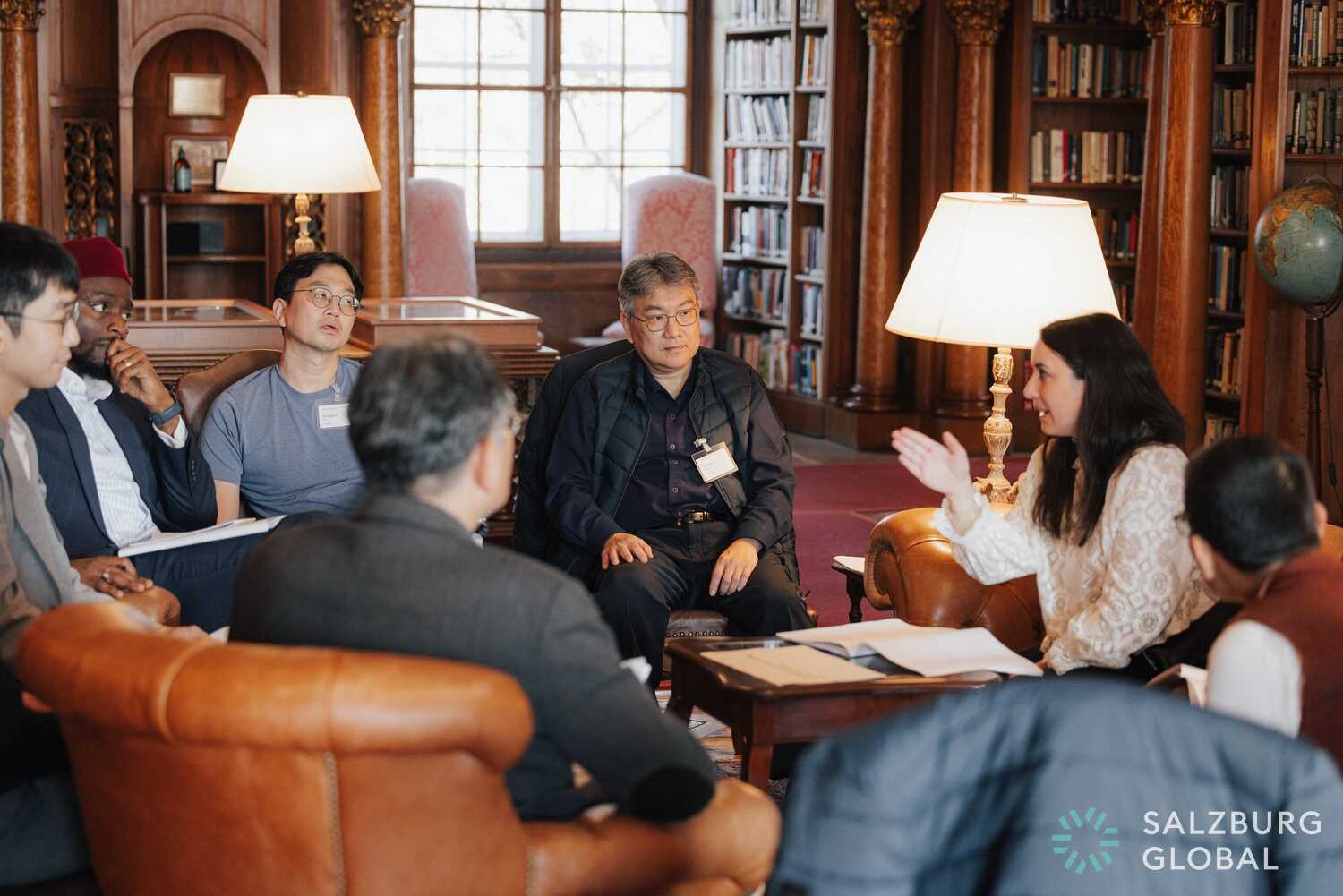
I am currently the Co-Founder and Chief Technology Officer (CTO) of Erudio Bio, Inc., an AI-Biotech company established in Silicon Valley. I am also the founding member and Leader of the Silicon Valley Privacy-Preserving AI Forum (also known as K-PAI), which brings together entrepreneurs, investors, engineers, scientists, and journalists from diverse fields in Silicon Valley. In addition, I serve as a KFAS-Salzburg Global Leadership Initiative Fellow of the 78-year-old nonprofit organization Salzburg Global Seminar, an advisor on the AI Task Force for the Association of Korean Medicine, a Visiting Professor in the Department of Electronic Engineering at Sogang University, an Advisory Professor in the Department of Electrical Engineering and Computer Science at Daegu Gyeongbuk Institute of Science & Technology (DGIST), and I also advise numerous companies. This year alone, I delivered over 50 AI and biotech-related lectures, seminars, and corporate technology consultations.
Childhood - The Pursuit of Fundamental Problems
For as long as I can remember, I loved mathematics. The patterns created by numbers, the logical beauty of problem-solving—these were my playground. I enjoyed analyzing patterns in the number of stairs I encountered on my way to and from school, and I was captivated by the concept of perfect numbers I first learned about in my fifth-grade vacation exploration activities. Meanwhile, I showed aptitude for BASIC programming on an Apple II computer at a local computer academy I happened to attend, and in fifth grade, I won an award at a district competition, earning the right to compete at the Seoul City level.
My middle school years were relatively ordinary. I remember struggling quite hard to get good grades in memorization-based subjects like social studies, geography, and history, as I had no talent for them. I was more interested in discovering patterns and making connections than simply remembering facts. Much later, while reading the masterpiece “The Story of the Romans” by Japanese female author Shiono Nanami, I realized that if I had understood the overall flow and identified patterns in history courses, they might have been more accessible to me. However, it would have been difficult for my younger self to realize this within Korea’s educational system where such subjects were thoroughly reduced to memorization exercises.
Looking back now, my brain seemed to refuse to simply memorize things it didn’t understand. While this was certainly disadvantageous for quickly improving grades, once I understood a topic, I would dig down not just to surface-level knowledge but to its fundamental roots. Why is a phenomenon or fact the way it is? How can it connect with other concepts? What can it be used for?—I pursued deep understanding rather than simple memorization. Or rather, looking back now, I was apparently born with this tendency. In middle school’s memorization-centered education system, this was definitely a weakness; it was a very unfavorable condition for getting good grades quickly. But the moment I entered Seoul Science High School, everything changed.
Seoul Science High School – Cognitive Leap
Finally, I seemed to have found where I belonged. An education that emphasized understanding over memorization, process over answers, “why” over results. My Friends (or rather Buddies) who loved mathematics and science, were full of curiosity, and enjoyed wrestling with a single problem all night. And (amazingly enthusiastic and empathetic) teachers who supported and guided all of this. There, my potential finally awakened. My true abilities, which had been suppressed until then, finally found an outlet. Not solving problems but creating them, not finding answers but creating new approaches, not learning but exploring.
Particularly in mathematics, which I originally loved, I experienced a tremendous cognitive leap. Having done no advance learning, joining the Math Olympiad club was something I couldn’t even dream of when I entered Seoul Science High School. But the teacher leading the club asked me to join it at the end of the first semester, which felt like a dream come true. I was able to study, compete, and learn alongside talented and exceptional friends, freely honing my mathematical skills. I still vividly remember the many moments of discovering and being amazed by the potential within me. Above all else, mathematics was pure joy to me. I still remember the thrilling feeling of hoping that my solution in my head would be better than the solution on the next page as I turned the pages of a math book. How many people in the world experience this type of thrilling and excitement, such a feeling that we normally have when we fall in love with someone, while turning the pages of a math book?
When entering university, what I most wanted to study was mathematics, followed by physics, and then electrical engineering (EE). However, following the guidance of my homeroom teacher and my father, I entered the Department of Electrical Engineering at Seoul National University. Looking back, this was the best (ever) choice in my life time. I discovered during my university studies that I was someone who loved the extremely abstract discipline of mathematics while also finding great joy and fulfillment in creating practical changes in the world. My childhood immersion in programming was probably because it satisfied both of these aspects. Being able to learn so-called semiconductor technology—the greatest technology ever invented by humanity in the 20th century—and various disciplines derived from it, including engineering mathematics, circuit theory, electronic circuits, electromagnetism, radio engineering, and semiconductor engineering, was another great fortune.
Studying Abroad – Decisions Under Uncertainty
During my senior year preparing to study abroad, there was a problem. I loved mathematics and was very interested in programming, and while I took courses in the mathematics and computer science departments that interested me while also receiving generally good grades in the EE courses, I couldn’t find a field I particularly wanted to pursue. Many of my peers (if not all) had already identified their fields of interest and chosen their specific majors. But I couldn’t figure out what I wanted to do.
The most popular field globally at that time was Digital Communications. So when I wrote my Statement of Purpose while applying to six universities, I expressed my ambition to conduct research in digital communications. Looking back now, this was a choice lacking authenticity. But looking back at that moment, I vaguely knew that I had to move forward even without clear passion and that sometimes I had to take a step even amid uncertainty. And ironically, this somewhat random start ultimately led me to the field I truly love.
Stanford – Destiny brought me to Stephen Boyd
Digital communications is one of the fields in electrical engineering that uses mathematics the most. This can be easily seen from the fact that Information Theory and Coding Theory form its core foundations. However, while taking digital communications classes at Stanford, I realized that even digital communications wasn’t mathematical enough for me. What I wanted was deeper mathematical beauty. Then I met Prof. Stephen Boyd! At that moment, everything became clear.
One winter night in 1999, while solving homework problems for his class, EE364: Convex Optimization, in my dormitory, I realized “This is what I’ve been searching for my entire life!” The point where mathematical rigor and engineering practicality perfectly meet! My heart raced, and I sent an email to Prof. Boyd right away. The next day, I joined Boyd’s research group; it happened that I had just passed the Ph.D. Qualifying Examination. I was the very first Korean student that Prof. Boyd even accepted to his group. After 5 years, I received my Ph.D. with doctoral dissertation titled “Convex Optimization for Digital Integrated Circuit Applications.”—It was the perfect marriage of mathematics and semiconductor engineering.
Samsung – Convert Theory to Practice
In 2004, immediately after receiving my doctoral degree, I made a decision that surprised everyone. I could have remained in academia the Stanford Ph.D. and the halo and reputation of being the first Korean student of Professor Stephen Boyd. But I chose Samsung Electronics Semiconductor. I was asked countless times, “Why industry, not academia?” Many colleagues who studied alongside me knew all too well that I was skilled in theory and loved research and academics. But I had a clear reason. I wanted to apply the optimization theory to practical applications of real-world semiconductor design and manufacturing processes. I wanted to see what happens when theory meets real-world problems.
And so began my 12 years at Samsung Semiconductor, which I joined through the military service exemption program. There, I developed circuit design optimization tools, manufacturing process prediction systems, next-generation DRAM Cell Scheme optimization systems, and the general-purpose AI optimization platform “iOpt”. Notably, iOpt is still used daily by numerous Samsung engineers for design optimization, process optimization, and numerous other tasks. The most important lesson I learned during this period was that a good technology is the one that is actually used by people who make real difference in the world. They are field engineers in the factory, scientists in the lab, and sales and marketing representatives in the field! No matter how sophisticated an algorithm is, if field engineers can’t use it, it’s useless. Bridging the gap between theory and practice—that was the engineer’s role and what I was destined to do as an entrepreneur later.
Amazon – Global Scale
In 2017, I headed to Amazon. Around that time, Silicon Valley was writing the future using a new language called AI. Reading books and newspaper articles published in Silicon Valley, I was convinced—this wasn’t just a technology trend but a paradigm transformation. To participate in this change, there was only one choice: go to the epicenter of the AI revolution, Silicon Valley! And so I crossed the Pacific Ocean once again, but this time, with my family. As a Senior Applied Scientist at Amazon, my mandate was clear – use AI to improve customer experience and create substantial business value. Through one of my leading projects—the Amazon Mobile Shopping App Main Menu Personalization—I combined deep learning and optimization to generate over $200 million in annual revenue increase for Amazon.
The biggest lessons I learned at Amazon were speed and scale. In Silicon Valley, fast execution is more important than perfect solutions. And good ideas must be able to deliver immediate value to millions, billions of users. But there was an even more important learning – what made speed and scale possible was corporate culture. This realization became a tremendous foundation for my entrepreneurship and company management in later years.
Gauss Labs – My First Startup
In 2020, I finally put my feet into the world of entrepreneurship. I co-founded Gauss Labs, an industrial AI startup spun off by SK Group, and took on the role of CTO and Global R&D Head. The decision to name the company Gauss Labs was no coincidence—it was the name of that great mathematician my academic lineage reaches through Boyd. Gauss Labs was an industrial AI specialist company. Our mission was to solve complex manufacturing problems—defect prediction, process optimization, equipment maintenance—with AI.
In the early startup days, the most difficult aspect was team building. Finding excellent engineers was important, but more crucial was gathering people who shared the same vision. I presented a clear vision: “Let’s become a global top tier in the field of industrial AI.” Another lesson learned was the importance of understanding customers’ real problems. No matter how excellent our technology was, it was meaningless if it didn’t solve problems customers actually faced. Going to the field, talking with manufacturing engineers, understanding their difficulties—that was the beginning of successful product development. As Global R&D Head, as a technology leader, I had to present technical vision and lead the team while also being involved in all aspects of the company, including business strategy, customer relations, and investment attraction. That was the entrepreneur’s life.
I had another challenge – operating the Silicon Valley U.S. office while finding and hiring exceptional talent that we couldn’t find in Korea. At the same time, I had to be responsible for R&D at both the main Korean office and the U.S. office in Palo Alto—multi-site operations. The difficulty brought great learning.
Looking back now, during that time, my unique differentiated theoretical depth was merging with insights and business acumen built through the actual battlefield of industry, sublimating into integrated capabilities that penetrate both theory and practice.
Erudio Bio – AI Revolution for Humanity
In 2023, I embarked on a new challenge: co-founding Erudio Bio, an AI-biotech company. Many people asked, “Why suddenly switch to biotech from semiconductors and manufacturing?” I had clear reasons. The pharmaceutical industry faces a serious problem – over 90% of new drug development fails in clinical trials. Because human body-drug interactions are too complex to be sufficiently validated in early stages, billions of dollars and over 10 years are invested, yet failure occurs. This isn’t simply a money problem. It’s a problem of patients suffering without treatment during that time. If this problem could be solved with AI? It would be far more meaningful than reducing semiconductor defect rates by 1%, i.e., it could save millions of lives.
In a sense, this wasn’t a change of fields. While my Stanford alum co-founder, who double-majored in EE and biochemistry, took on the life sciences, I continued to utilize my strengths—AI and optimization—that I had commonly demonstrated in semiconductors, manufacturing, and e-commerce. Whether it was the optimization algorithm that improved wafer yields at Samsung Semiconductor or the recommendation system that increased sales at Amazon, the essence was the same – finding patterns in complex systems and finding optimal points among countless variables. It’s just that the system changed from transistors to proteins, from process parameters to biomolecules; the tools were the same, but the target of their application changed from silicon chips to life. And that change felt like natural evolution to me. Perhaps it was inevitable expansion; it was as if I had been preparing for it long ago.
Erudio Bio’s core technology is bioTCAD (biological Technology Computer-Aided Design), applying the TCAD concept used in the semiconductor industry to life sciences. We use high-quality molecular interaction data measured by Dynamic Force Spectroscopy to make preclinical drug design more reliable and faster. By reducing drug development costs and shortening development periods, Low- and Middle-Income Countries (LMICs) that desperately need new low-cost treatments can benefit. Our other innovation is VSA (Versatile Smart Assay) technology, a platform that can accurately detect multiple biomarkers simultaneously. It can significantly improve early cancer diagnosis accuracy by solving the key limitations of existing multiplexed diagnostics – cross-reactivity and false-positive problems.
Particularly, providing affordable and accurate diagnostic and treatment tools to patients in low-income countries and humanity—this is our ultimate goal. We also established partnerships with world-class institutions including Stanford Medicine, Harvard Medical School, and Analog Devices. These partnerships are no accident. They’re the result of combining the experience my co-founder and I built in semiconductors, the AI technology learned at Amazon, and the industrial AI know-how acquired at Gauss Labs.
In July 2025, I established the Korean subsidiary of Erudio Bio, Erudio Bio Korea, and took on the role of CEO. We’re developing Korea-specific cancer diagnosis solutions in collaboration with Seoul National University Bundang Hospital. The goal is to create customized diagnostic tools reflecting Korean genetic and environmental characteristics. Institutional Review Board (IRB) approval procedures are underway, with the goal of completing approval within the year. We’re also conducting similar collaborations with the Department of Clinical Laboratory Medicine at Keimyung University Dongsan Hospital in Daegu.
From semiconductors to e-commerce, industrial AI, and now life sciences—superficially, they’re completely different fields. But for me, there’s one consistent flow – using the tools of AI and optimization to solve people’s (most critical) real problems.
Entrepreneur’s Freedom – Paradoxical Liberation
After leaving Gauss Labs and founding Erudio Bio, an unexpected change came to me. Clearly, the amount of the work I was doing increased by 2-3 times—measured by results and impacts. Yet paradoxically, I found more leisure time and mental space in my head.
How was this possible? I can think of two main reasons. First, I finally became the true owner of my time (hence, myself). I was no longer trapped in the framework of 9-to-5 working hours. I did things when I could do those at my maximum efficiency (only when I wanted to do); I could choose when and what at my disposal. This wasn’t simply freedom of time management. It meant I could design my whole life. Second, I could finally fully unleash my imagination with my unique creativity, hence could plan and execute the development and business activities according to my own planning and design, not by someone else’s predetermined (way less optimal) directions.
Finally, I could realize my vision in my own way. This was the true liberation only an entrepreneur can enjoy. At last, for the very first time throughout my whole life, I became the genuine, truly authentic, and perfectly complete owner of my life.
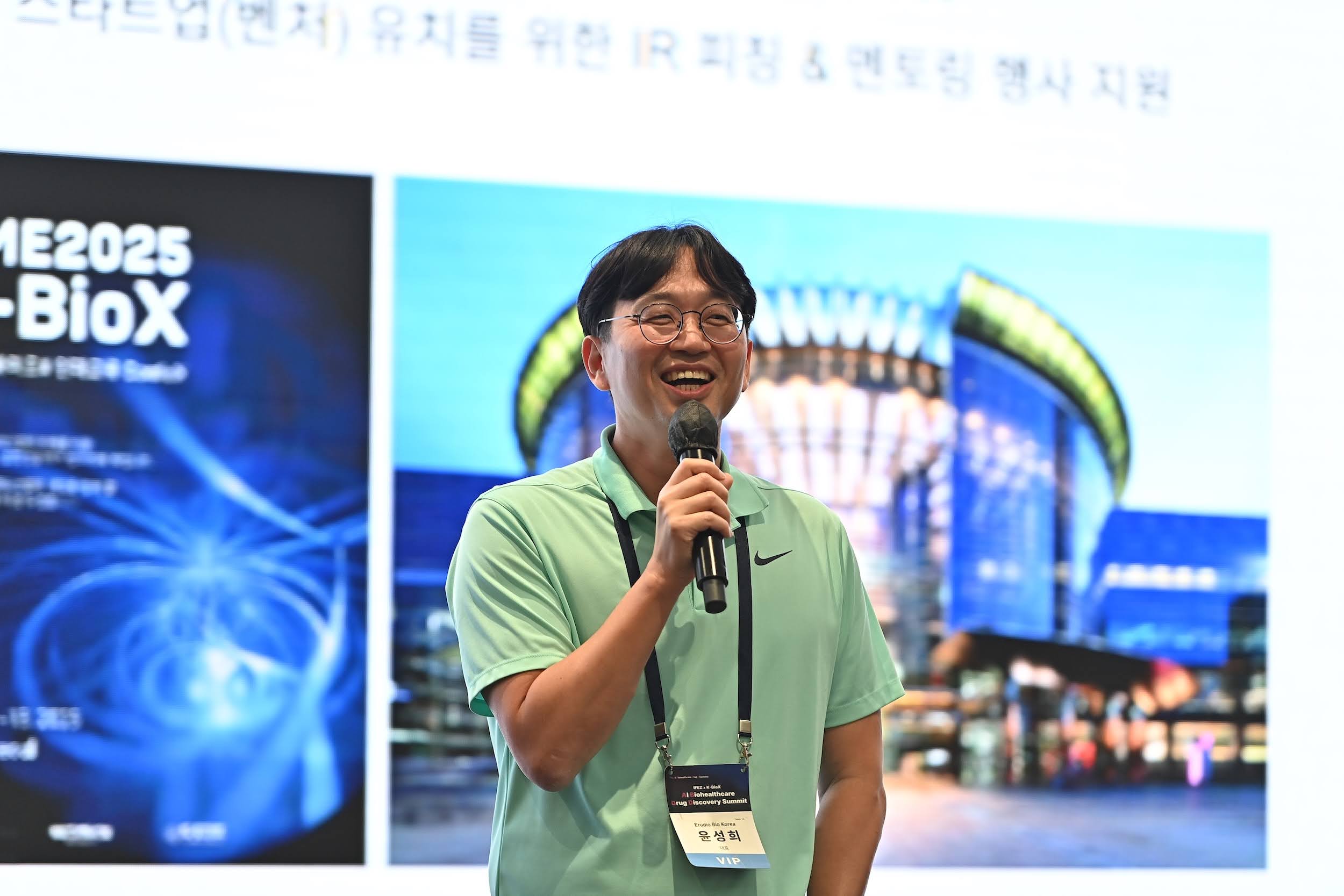
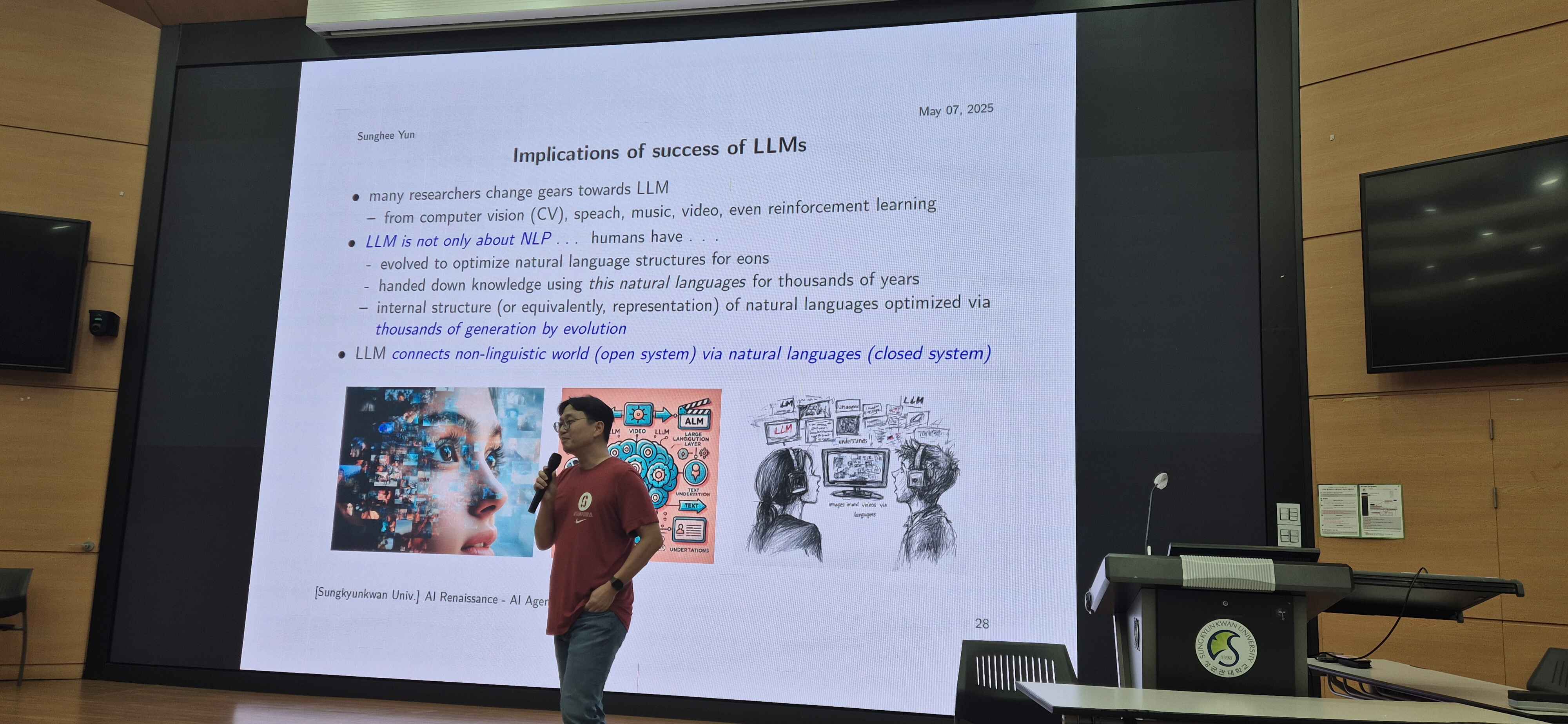
I immediately began maximally utilizing these amazing opportunities. I provided technical and business consulting to companies that requested my expertise, pursued personal studies in mathematics, engineering, statistics, philosophy, cognitive science, and history—subjects I couldn’t fully explore during my corporate career—and actively engaged in AI lectures, seminars, and consultations at prestigious universities including, but not limited to, Stanford University, Seoul National University, Yonsei University, Korea University, KAIST, POSTECH, Ewha Womans University, Sogang University, DGIST, KIST, Hanyang University, Sungkyunkwan University, and SEOULTECH, as well as at various AI and biotech conferences, events, forums, and lots of industry organizations and large corporations such as Samsung, SK hynix, LG Electronics, and Solidigm. In 2025 alone, I delivered over 50 AI lectures and seminars!
You can find traces of my academic and practical explorations in these areas at the following links:
K-PAI – The Power of Connecting People
The biggest change in my life has been co-founding and becoming the Leader of the Silicon Valley Privacy Preserving AI Forum (K-PAI). It started as a small gathering. But in less than a year, K-PAI had positioned itself at the center of Silicon Valley’s AI community, which was neither intended nor expected. I just tried my best to make it meaningful and helpful for people who came to our Forums—I tried to present and showcase comprehensive subjects and holistic aspects of artificial intelligence (AI), invited excellent speakers, and earnestly fulfilled our role as a non-profit organization by providing special and differentiated networking opportunities.
To my very surprise, things we had never even imagined would happen happened within a year! KOTRA Silicon Valley proposed a perpetual partnership. Within months, we saw lots of voluntary sponsors; the sponsorships for all 6 Forums in the first half of 2026 have been secured already. We’ve committed to co-hosting events with KOTRA Silicon Valley, K-BioX, Korea AI & IC Innovation Center (K•ASIC), Korean American Bar Association of Northern California (KABANC), and the Consulate General of the Republic of Korea in San Francisco. These are truly remarkable achievements for a newly launched forum just over a year old. K-PAI has become a truly special and important gathering where leaders gather from diverse fields—technologists, entrepreneurs, investors, engineers, scientists, and journalists.
In Silicon Valley’s Korean community today, when people think of “AI,” they think of “K-PAI.” I’ve even become known as “the K-PAI Person.”
K-PAI’s success is no accident. It demonstrates the power of a community built with honest passion and selflessness. I didn’t simply organize technical seminars—I created an ecosystem that connects people. AI researchers meet investors, entrepreneurs find engineers, and students connect with mentors. And everyone learns and grows together. K-PAI also focuses on practical value. It’s not just about sharing the latest AI technology trends once a month. We discuss not only technology but also real business opportunities, hiring information, and technical and strategic partnership possibilities.
Through K-PAI, I discovered yet another area where I truly excel. While technology is important, I also have a unique muscle and strength for connecting people and creating meaningful conversations. While totally unintended, the network created through K-PAI has been tremendously helpful to my business, both directly and indirectly. Ironically, the effect seems even more dramatic precisely because I never consciously intended it.
Isn’t this the essence of entrepreneurship, though? Not just creating products and services, but building ecosystems where people gather and create values together.
To Students and Young People - What My Life Journey has Taught Me
Connector Rather Than Expert
I am neither a full-time mathematician nor a full-time scientist. I am neither a full-time engineer nor a full-time biologist. But I am all of it, and I connect all these fields. I apply optimization theory to semiconductor design, AI disciplines to e-commerce, industrial AI algorithms to manufacturing, and now the collective knowledge, experience, and know-how that I’ve cumulated over the past years on AI finally to the life sciences.
My strength lies not only in the depth of fields of Convex Optimization and Artificial Intelligence (AI), but also in using these deep expertise in several fields as an anchor while freely crossing boundaries between multiple domains to integrate and synthesize them. In this process, I create economic value while contributing to a better future for Humanity. Innovations in the future will occur at the boundaries. Typical examples would be the convergence of AI and life sciences, the combination of semiconductors and medical devices, and the intersection of cryptography and privacy protection!
Entrepreneurship is an Act of Creation
Many people think of entrepreneurship simply as a way to make money. But for me, entrepreneurship is an act of creation. When I founded Gauss Labs, I didn’t just create a company—I defined a new field called industrial AI. Through Erudio Bio, I’m exploring new possibilities where AI meets life sciences. And most of all, I’m imagining and creating business models and market strategies that no one in the world has ever thought of or will ever do in any possible future—using deep mathematical and theoretical foundations, practical experience accumulated in the field, and my differentiated knowledge and experience in humanity subjects and social sciences.
While there are guidelines that every entrepreneur should read in books like Lean Startup and Zero to One, and there are industry conventions that everyone follows, I’m creating my own unique business strategies by maximizing my own imagination and creativities. And through K-PAI, I built a new form of Silicon Valley AI ecosystem. Academic research is also an act of creation, but entrepreneurship changes the world in way larger scale. Your ideas become products or services, which change people’s lives, the entire process of which carries great responsibility.
Never Fear Failure (because there is no such a thing)!
One of the most common wrong ideas people have about me is that I would have never had agonizing moments throughout my life journey. It might very well have appeared that way. In high school, I won numerous awards at national competitions including Math Olympiad medals. I ranked the 15th nationwide on the Colleagues Scholastic Ability Test (CSAT), entered Seoul National University (SNU) with the second highest score on college entrance exam, graduated SNU with Honors, and went on to Stanford University for advanced degrees. I passed Stanford EE’s notoriously difficult Ph.D. qualifying examination just a few months after starting my master’s program with the highest ever score in Stanford Korean students’ history, and immediately joined Professor Stephen Boyd’s research group as his first Korean student—a professor renowned as a genius even among Stanford faculty.
But in reality, my life has been a continuous series of uncertainty and anguish. I constantly wondered whether I should continue studying EE as my major because I found myself loving theory on one hand and being deeply immersed in programming on the other. I seriously thought of possibilities of changing my major countless times; most of the time, to mathematics. When I tried to get a job at Samsung Semiconductor after completing my Ph.D. (as part of the military service exemption program), many seniors advised against it, telling me to stay in the U.S. When I left Samsung, many people asked, “Why leave the best company in Korea with great job security?” Was I not afraid of leaving Samsung while getting such advice from so many of my colleagues? Honestly, I was scared. The same was true when I left Amazon to found Gauss Labs—giving up the stability of a global tech giant to leap into the uncertainty of a startup. And again when I started Erudio Bio—completely changing fields from semiconductors and manufacturing to biotech, many people around me were curious.
Each time, I faced real uncertainty—things could have gone wrong. But what mattered most was pursuing meaningful work, moving in the direction that felt right after careful thought. That’s what fueled my passion and kept me going.
These challenges taught me a really good lesson. Challenges aren’t about getting what I want and desire at that moment. The real reason to take on challenges is that surprising gifts beyond my expectation always wait for me hidden.
When I headed to Amazon for AI, the unexpected gifts waiting for me were me being able to fully absorb Silicon Valley big tech’s advanced culture into my cores, learn the utmost importance of scale in AI projects, and have the opportunity to learn numerous software development skills. The same was true when I joined Gauss Labs. My potential business insights dormant within me awakened, and by combining my mathematical depth and theoretical understanding, I reached a new level in the field of entrepreneurship. The gifts waiting for me when I started Erudio Bio were even more striking. I became the genuine and true owner of my time, or rather, myself. I created a new ecosystem called K-PAI. The infinite possibilities where bio-medical fields and AI converge unfolded, and I actively network with numerous medical doctors, hospital officials, biotech professors, and investors while stimulating my brain with intellectual joy and new challenges.
Value your Colleagues
Work at large corporations, entrepreneurship, and research are all team sports.
At Gauss Labs, I created a vision with colleagues. At Erudio Bio, I collaborate with partners from Stanford Medicine, Harvard Medical School, and Analog Devices. At Erudio Bio Korea, I work with diverse business partners including Seoul National University Bundang Hospital (SNUBH), Daegu Keimyung University Dongsan Hospital, KAIST’s Nanofab, Korea Research Institute of Bioscience and Biotechnology (KRIBB), and LULUMEDIC. At K-PAI, I build an ecosystem with hundreds of community members. Trusting colleagues, respecting partners, and understanding customers—this is the key to success. And this isn’t just a business strategy. It’s a way of life. Relationships with people, community, and trust—these are at the heart of all my activities.
Pursuing Greater Purpose
My ultimate goal isn’t to simply create a successful company. My life’s goal is to create a future where humanity thrives through health, safety, freedom, and equality. This is why I started Erudio Bio. I want to use AI technology to diagnose cancer early and save more lives. I want to give hope to patients in low-income countries where medical services are hard to access. I am seeing the same future with K-PAI. AI technology shouldn’t benefit only a few experts or large corporations—it should be technology that everyone can access, understand, and utilize. That’s why I share knowledge, connect people, and build community.
Where will you use your talents? How will your work make the world a better place?
A Touch and Challenging, yet Exciting and Meaningful Life Journey of Mine!
My life journey has been anything but smooth. Each choice was full of uncertainty and risks—at least from most people’s perspective. From semiconductors to e-commerce, to industrial AI, and then to biotech. But looking back, all these journeys were connected as one. Each step was preparation for the next challenge. The manufacturing knowledge learned at Samsung led to Gauss Labs, the AI technology acquired at Amazon led to Erudio Bio, and the entrepreneurial experience gained at Gauss Labs led to K-PAI.
Most importantly, now I’m living the happiest moments of my life.
We are developing technology that can provide better quality of life to Humanity. Through K-PAI, I share knowledge and opportunities with hundreds of people, and through over 50 lectures and consultations in a year, I share my experiences and insights with my contemporaries and the next generations.
This is the very life I’ve always wanted. The life I had not even thought would be possible, and the life that I had not known that I wanted, but the very one I had always desired (consciously or subconsciously).
And finally, I realize this – as long as I continuously challenge myself, and most importantly, enjoy the process itself, nothing is failure; no, it can’t be! Success is not about reaching at some point, but is this very moment of constantly striving with positive attitude while caring for neighbors and embracing love for Humanity. Therefore, I’m living a successful life at this very moment.
And this is True for you, and (hence) for all of us!