
AI and Universal Basic Income - The End of the Survival Imperative!
posted: 05-May-2026 & updated: 11-May-2026
Share on LinkedIn | Instagram | Twitter (X) | Facebook
This article is a sequel to Coming Back to the Human in the AI Era — A Sequel to “Why Do We Live?”.
For nearly the entire span of human existence, the question “should we work?” has been functionally meaningless. Survival demanded labor. The question was never whether to work, but how to work, what to work on, and for whom. Today, for the first time in human history, that question is becoming genuinely possible to ask.
The Axial Age made it possible for a tiny minority to ask – what is the good life beyond survival? The age we are entering may make it necessary for everyone to ask this question.
This is, I believe, the most important reason to think seriously about AI and Universal Basic Income — not as a policy debate about labor economics, but as a civilizational question about what humans are for.
Universal Basic Income might be one element of this larger response. But it is this multidimensional work — contemplative, technical, institutional, economic, done seriously, done together — that will determine whether that element functions as part of a coherent response or as an expensive distraction.
This completely reframes the entire technological panic. We spend so much time fearing the machines, when the real challenge is facing ourselves in the mirror once the machines relieve us of our burdens.
The Morning the Ancient Law Vanishes
Imagine tomorrow morning. You wake up, sunlight streaming through your window. You reach for your phone, squinting at the screen — and suddenly remember that something absolutely impossible has happened. The fundamental rule of human existence, that invisible heavy law that says you must work in order to afford to continue living, has just vanished. It is entirely gone. Your basic needs — housing, food, healthcare — are all irrevocably, permanently met. What do you do at 9 AM? How do you spend your afternoon? Your year? The rest of your life?

This is not science fiction. This is the civilizational question our generation will be forced to answer — perhaps within our lifetimes, certainly within those of our children.
The Question That Should Not Be Possible
In a conversation with Professor Jaeseok Huh at Soongsil University in November 2025, a thought struck me with unusual force. It was not a new thought in any literal sense — Universal Basic Income has been discussed for centuries. But the force of the thought, the sense that something previously theoretical was becoming structurally inevitable, hit me as something genuinely new.
This essay is an attempt to think through what I have come to believe is one of the most important questions our generation will face: given the trajectory of Artificial Intelligence (AI), what becomes of work, meaning, and human flourishing in a world where human labor may no longer be economically necessary? And more pointedly: what happens to the survival imperative that has structured nearly all of human civilization?
I want to be honest at the outset that I am not certain Universal Basic Income is the right answer. What I am certain of is that the question we have been asking — which jobs will be replaced and which will survive? — is the wrong question. It assumes the old frame. It assumes work as we have known it must persist. The deeper question is whether the historical accident of the survival-work coupling, which has persisted even past the Axial Age, is finally coming to its end — and what that means for what it means to be human.
The Long Arc — From Survival to Meaning to What?
For nearly all of human existence, our ancestors lived as hunter-gatherers. The cognitive landscape was dominated by a single imperative: survive! Survive harsh nature, savage beasts, starvation, disease, the violence of other humans. In that environment, life was governed by a singular, merciless mathematical equation – calories (energy) expended must be less than or equal to calories (energy) acquired. There was no meaningful distinction between “work” and “life” because every waking moment was, in some sense, oriented toward continued existence. You did not have a career. You had a metabolic requirement.
Then something remarkable happened. Around the middle of the first millennium BCE, in a development that the philosopher Karl Jaspers in 1949 termed the Axial Age, human civilizations across Persia, India, China, the Levant, and the Greco-Roman world underwent a near-simultaneous awakening. Buddha, Confucius, Lao-tzu, the Hebrew prophets, Socrates, Plato, Aristotle, and countless others began asking questions that had no direct survival utility: What is the good life? What is justice? What is the nature of reality? What lies beyond death?
This is one of the most extraordinary facts about human history: at multiple points around the globe, more or less simultaneously, humans began pursuing meaning, beauty, virtue, and transcendence as ends in themselves. For the first time, an organism programmed by millions of years of evolution to seek food and shelter suddenly sat down and asked questions that offered absolutely zero caloric value. Artists pursued beauty. Philosophers pursued truth. Mystics pursued union with the divine.
Yet here is the crucial observation: this philosophical explosion was essentially a luxury product. The Axial Age awakening, this beautiful pursuit of the good life beyond survival, was reserved for a tiny, tiny fraction of society — the elite, the mystics, the upper classes, whose leisure to think was entirely subsidized by the brutal, backbreaking labor of the 99% beneath them. To sit in an olive grove and debate the nature of the soul with Socrates, you needed to not be in the fields harvesting grain. You needed someone else doing the work.
For the vast majority of human beings, the survival imperative remained dominant even past the Axial Age. The contemplative life, the artistic life, the philosophical life — these remained the privileges of small elites, often supported by the labor of others or by inherited resources. The fundamental human condition, for nearly everyone, remained: work to live.
The Industrial Revolution, the invention of synthetic fertilizers, the serendipitous discovery of penicillin — these dramatically increased human productivity and reduced the risk of starvation and disease. We look at our modern world with its air conditioning and grocery stores and think we have conquered the brutal state of nature. But here is the forceful argument: we fundamentally failed to break the coupling of work and survival. We did not dismantle the treadmill. We just upgraded the materials it was built from. We decorated that survival treadmill with climate-controlled offices and ergonomic chairs, but structurally, we are still foraging.
Think of it this way – we are still wearing the exact same biological hardware of the hunter-gatherer, but we have abstracted the jungle. A peasant plowing a field to survive became a factory worker pulling a lever to survive. That factory worker became a modern project manager sitting in a sleek climate-controlled office, updating spreadsheets from 9 to 5. The daily physical environment is infinitely safer — you are not physically running from a predator — but structurally, the imperative is identical. You are still expending energy to acquire the resources necessary to continue existing. The peasant became the factory worker. The factory worker became the office worker. The office worker now sits at a desk from 9 to 5, Monday to Friday, doing work that often bears no obvious relationship to direct human survival but which remains, structurally, what one must do to live.
The Question I Could Never Stop Asking
For reasons I have only partially understood, I have always struggled to take this arrangement for granted. Where most people around me accepted “you must work” as a kind of cosmic given, I kept asking – why?
I now understand why I could never find a satisfying answer. There is no satisfying answer. There is no inevitable cosmic necessity that humans must work. The only genuine necessity is that we must survive — and given a particular economic and technological arrangement, work has been the means of survival. But this is contingent, not necessary. The coupling of survival and work is a historical fact, not a metaphysical truth.
This distinction matters enormously, because if the coupling is contingent on a particular technological and economic arrangement, then changes in that arrangement can decouple them. And we are now living through exactly such a change.
The AI Inflection Point
What makes the current moment genuinely different from every other technological transition in human history is not the magnitude of displacement, but the universality of it. Previous waves of automation — the steam engine, mechanized looms, assembly lines — replaced specific categories of physical labor. They were fundamentally narrow. Human intelligence, human judgment, human creativity remained economically necessary. We could always point to domains where the human mind was irreplaceable.
That is ending.
The modern generation of AI systems — and this is not science fiction, this is observable reality in 2026 — can now perform or rapidly approach human-level capability in domains we previously considered uniquely human – legal analysis, medical diagnosis, software engineering, (creative) writing, strategic planning, and scientific research. These are not niche applications. These are the cognitive foundations of the modern economy.
More importantly, the trajectory is accelerating. Every six months, capabilities that seemed impossible become routine. Tasks that required years of human training are now accomplished by systems trained in weeks. And crucially, unlike human workers, AI systems scale horizontally with near-zero marginal cost. You cannot hire a thousand brilliant lawyers overnight. You can deploy a thousand instances of an AI legal system in minutes.1
This is not about whether specific jobs will be “safe” or “at risk.” That framing misses the point entirely. The question is whether human economic necessity itself — the fundamental coupling of work and survival that has structured civilization for millennia — is entering its terminal phase. And if so, what comes next?
The Existential Dimension
This is where most discussions of AI and automation go catastrophically wrong. They fixate on unemployment rates, retraining programs, and GDP impacts — all important, but all missing the deeper crisis.
The crisis is not economic. It is existential.
For the overwhelming majority of people alive today, work is not merely a means to acquire resources. It is the primary source of identity, purpose, social structure, and moral worth.
When AI systems can perform cognitive labor more effectively and at lower cost than humans, we are not merely facing an unemployment crisis. We are facing a meaning crisis at civilizational scale.
Here is the thought experiment that makes this visceral. Imagine — genuinely try to imagine — a world where you wake up tomorrow and your material needs are permanently, irrevocably met. Food, shelter, healthcare, security — all handled. Not by your labor, but by automated systems so efficient that human participation is economically optional.
What do you do?
Most people, when they sit with this question honestly, experience something between vertigo and terror. Because the question reveals how much of our cognitive architecture is built around the necessity of earning a living. Remove that necessity, and the foundation does not just shake — it dissolves.
Think of it like this: imagine you spent your entire life in a rigidly structured boarding school. Every day, someone tells you exactly where to be, what to study, when to wake up, when to eat. You might hate the rules, but you never have to agonize over your purpose. Your purpose is to follow the schedule and pass the test. The structure relieves you of the burden of choice.
But then graduation day arrives. You walk off campus. The gates close behind you. There are no bells ringing. No one is telling you what to study. No one is grading you. You are completely, radically free.
And that freedom is exhilarating for about ten minutes — until the paralysis sets in. You realize that you now have to invent your own schedule, your own metrics for success, your own purpose. It is utterly terrifying.
That boarding school graduation is the exact civilizational threshold we are standing on. The era of human labor was the boarding school. We are about to step into radical freedom. And most of us have no idea how to handle it.
The Crisis of Inherited Meaning
The modern world operates on a kind of existential autopilot.2 Most people inherit their sense of meaning from cultural structures that pre-exist them – family traditions, religious frameworks, national identities, and professional roles. These structures tell you what matters, what is worth pursuing, and what constitutes a good life.
But these inherited structures were all built within the survival-work framework. When that framework dissolves, the structures built upon it become unstable.
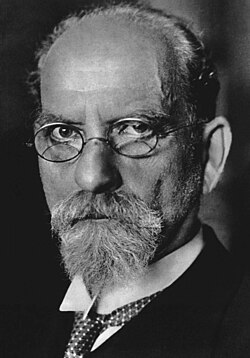


This is not a new problem. It is the problem that 19th and early 20th century existentialist and phenomenological philosophers — Edmund Husserl, Søren Kierkegaard, Friedrich Nietzsche, Martin Heidegger, Jean-Paul Sartre, Albert Camus, Maurice Merleau-Ponty — recognized as the fundamental challenge facing modern humanity.



Their work was prescient in a way that even they did not fully grasp. They were writing for a future in which the inherited structures of meaning had collapsed but the survival imperative still organized daily life. They were writing for us — for a future in which even the survival imperative may finally release its grip.
What they understood, and what we must now confront at civilizational scale, is that meaning is not discovered; it is created, or rather, should be created.3 There is no cosmic script that tells you what your life is for. You are the author. And that responsibility — the responsibility to construct purpose consciously rather than inherit it from circumstances — is simultaneously the most profound freedom and the most terrifying burden the human condition offers.
Why This Matters for Universal Basic Income
This brings us back to Universal Basic Income (UBI), but from an entirely different angle than the usual policy debates.
If the analysis above is correct — if we are entering an age where the survival-work coupling is breaking, and if that dissolution creates a civilizational-scale meaning crisis — then Universal Basic Income is not primarily an economic intervention. It is an existential infrastructure.
UBI, in this framing, is the mechanism that allows the survival imperative to release its grip. It says – your material needs are met. You do not have to spend 40-60 hours per week performing economically productive labor to justify your continued existence. You are free.
But — and this is absolutely crucial — freedom without the capacity to navigate it productively is not liberation; it is crisis.
Handing people a check and telling them “you are now free to pursue meaning” without simultaneously cultivating the psychological, philosophical, and social infrastructure to actually construct meaningful lives is not a solution. It is an abdication of responsibility. It is the technocratic fantasy that complex human, spiritual, and existential problems can be solved by tweaking a spreadsheet. A deposit in a bank account does not cure a hollowed-out soul.
This is why treating UBI as a standalone policy fix is so dangerous. The real question is not “how much should we pay people?” The real question is “how do we prepare an entire civilization to become the conscious, deliberate authors of their own existence?”
What We Actually Need — The Contemplative Response
The survival-work decoupling demands something far more profound than economic policy. It demands that we engage seriously with the fundamental questions of human existence — questions that have occupied the humanities and social sciences for millennia but which we have treated as peripheral luxuries, separate from “real” work in economics and governance.
We need to explore deeply — not superficially, not as academic exercises, but as urgent practical necessities — the insights from philosophy, cognitive science, psychology, anthropology, sociology, the contemplative traditions, and yes, even spiritual domains that speak to how humans create meaning, sustain purpose, and flourish in the absence of external compulsion. These are not soft disciplines. They are the disciplines that address the hardest question: what is a human life for?
This exploration cannot happen in isolation. It must involve genuine collaboration among many constituencies. We need an Avengers-level assembly of human intellect, because the adaptations required go infinitely deeper than adjusting the tax code.
We need the people who deeply understand the human dimension — the philosophers, the developmental psychologists, the cognitive scientists, the contemplatives, the artists — sitting directly across the table from the people who actually understand the mechanics of the technology – the AI researchers, the hardware architects, the algorithm engineers who know how neural networks are actually weighting the data.
And sitting next to them, you must have the practitioners of governance — the lawmakers, the regulators, the civil servants — coupled with voices from macroeconomics, the private sector, and labor organizers.
Not the performative “stakeholder engagement” that has become standard in policy-making, but genuine contemplative work: sustained inquiry, honest reckoning with complexity, willingness to sit with uncertainty, and the intellectual humility to recognize that we are entering genuinely new territory.
The solutions, if they exist, will emerge from this synthesis. They will require:
New frameworks of law — explicitly engineered to protect human agency when we are interacting with systems vastly more intelligent than we are.
New regulatory frameworks with real teeth — designed specifically to prevent the extreme destabilizing concentration of wealth that unchecked AI development could produce.
New educational paradigms — and this is perhaps the most profound shift required. Right now, for the last century, our educational system has essentially been a factory designed to produce compliant workers for other factories or offices. We teach rote memorization, specialized skills, and obedience to a schedule. We teach people how to be economically useful.
But if economic utility is no longer the goal, the entire curriculum collapses. We must radically shift education toward teaching autonomous meaning-making. How do we teach a generation of children how to cultivate rich inner lives, how to engage deeply with the arts and philosophy, how to build strong communities, and how to define their own worth entirely independent of their economic output?
New cultural campaigns — to shift how we understand work and worth. We need a mass cultural movement to redefine what it means to be a successful human being.
New mechanisms for meaning-making at scale — drawing from contemplative traditions, community-building practices, artistic expression, philosophical inquiry, and psychological insight.
Universal Basic Income might be one element of this larger response. But it is this multidimensional work — contemplative, technical, institutional, economic, done seriously, done together — that will determine whether that element functions as part of a coherent response or as an expensive distraction.
The New Literacy — Meaning-Making as Survival Skill
Here is the paradigm shift that reframes everything – 300 years ago, you needed to know how to farm to survive. 50 years ago, you needed to know how to read and execute complex tasks. In the very near future, the required literacy to survive — not economically, but existentially — will be the ability to generate your own meaning.
The capacity to look inward, to construct purpose consciously, is no longer just a nice-to-have philosophical hobby for retirees. It is the absolute baseline survival skill for the future of the human race. It is the new literacy.
This completely reframes the entire technological panic. We spend so much time fearing the machines, when the real challenge is facing ourselves in the mirror once the machines relieve us of our burdens.
Why the Solutions in Those Essays Matter
For what it is worth, I have grappled with these questions more personally than this essay might suggest. My explorations — documented in “Why Do We Live? – A Wrong Question to Ask” and its sequel “Coming Back to the Human in the AI Era — A Sequel to “Why Do We Live?”” — are not merely intellectual exercises or philosophical speculation.
I believe the territory explored in those essays — the recognition that meaning is created rather than discovered, that we are the authors of our own purpose, that the deepest human capacity is the ability to choose what we honor in a universe that honors nothing — truly touches something fundamental in the human soul. Not as abstract philosophy, but as lived reality. Not as theory, but as the actual ground on which we will need to stand when the old structures fall away.
These are, I believe, the most practical solutions that will actually work. Not because they provide easy answers or simple frameworks, but because they address the actual territory we will need to navigate – the existential dimension of post-survival existence. The capacity to be fully human in the absence of external necessity. The ability to construct purpose consciously rather than inherit it from circumstances.
But — and this is crucial — these contemplative insights must be coupled with pragmatic action across every dimension of society. We need new laws that protect human agency while enabling economic transition. We need regulatory frameworks that prevent the concentration of AI-driven wealth while funding the social infrastructure for meaningful existence. We need educational systems that cultivate the capacity for autonomous meaning-making. We need cultural movements that shift how we understand value and worth. We need economic policies, yes, but also philosophical education, contemplative practice, institutional innovation, and political courage.
The solution is not one thing. It is everything, done together, done seriously, done with full awareness of what is at stake.
The Question Remains
The hunter-gatherer worked to survive. The Axial Age contemplative worked partly to survive and partly to seek meaning. The industrial worker worked to survive within new institutions. We may be entering an age in which the question is no longer how to survive, but how to live.
I do not claim to have answered this question. I claim only to have recognized its urgency and begun the contemplative work it demands. The Axial Age made it possible for a tiny minority to ask – what is the good life beyond survival? The age of AI may make it necessary for everyone to ask this question.
This is not a transition we can navigate through policy papers and committee meetings alone. It will require the deepest resources of human wisdom — philosophical, psychological, spiritual, and practical — brought to bear on the most consequential question our generation will face.
So I return to the question from the opening – tomorrow morning, you wake up. The machines are running the economy. UBI has cleared your bank account, securing your shelter and your food until the end of your days. The survival imperative, the ancient engine of human history, has gone quiet.
When you throw off the covers and place your feet on the floor, what is the very first thing you choose to do? How will you take that terrifying, beautiful, completely blank canvas and consciously choose what to honor in your life?
We are stepping out of the boarding school. We are about to be handed the ultimate responsibility – becoming the conscious, deliberate authors of our own existence.
We had better begin in earnest!
Sunghee
Co-Founder & CTO @ Erudio Bio, Inc.
Philosopher, Mathematician, Thinker, and Universal Truth Seeker
Entertainer, Entrepreneur, Engineer, Scientist, Researcher, Creator, and Connector of Ideas, and, most of all, PEOPLE!
- Indeed, I was inspired by the conversation I had an honor to have with Dr. Minha Hwang one lazy Saturday afternoon in Bay Area! ↩
-
Indeed, this doesn't just apply to the modern world, but every stage of the human history (especially ever since the [Axial Age](https://en.wikipedia.org/wiki/Axial_Age){:target="_blank"}).
The inheritance of meaning from pre-existing cultural structures is not a modern phenomenon but the human default across virtually all historical periods. Even the Axial Age, which introduced philosophical traditions of self-examination and conscious meaning-making, remained accessible only to small elites while the vast majority continued to inherit purpose from tradition, religion, and social hierarchy. The unprecedented challenge we face is not that meaning has been inherited – it always has been — but that the structures from which it was inherited are dissolving precisely as the survival imperative that sustained them releases its grip. ↩ - This claim — that meaning is constructed rather than discovered — deserves more development than this essay can provide. I have explored its implications at length in "Why Do We Live? – A Wrong Question to Ask" and its sequel "Coming Back to the Human in the AI Era — A Sequel to “Why Do We Live?”", where I trace what it means, both philosophically and as lived practice, to become the author of one's own purpose. ↩